Showing posts with label best garden blogs. Show all posts

Monday, January 2, 2017

The Best of 2016 and Looking Forward to 2017

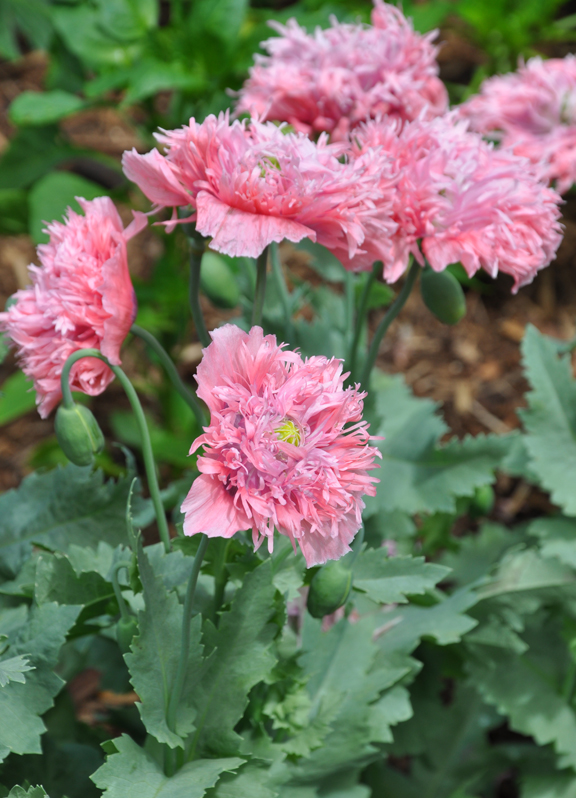
One of the gardens I hope to show you in 2017.

Happy new year everyone! 

I thought I'd begin the new year with a look back at the posts readers liked best and a give you at little preview of what is to come in 2017.


Not surprisingly this shade garden was your favourite.  I showed a number of terrific private gardens, but the mix of shady foliage plants in this backyard made it a standout for readers.


This post that featured a garden filled with hostas was also really popular, 
as was this post on collectable hostas.


The post on creating a butterfly garden was also a big hit with readers. 


And while I'm on the subject of insects, I was very glad to welcome Jean Godawa as a contributor to Three Dogs in a Garden. We gardeners have a tendency to view insects largely as pests. Jean viewpoint was a refreshing reminder that insects can play a positive role in the garden. 

Not surprisingly then, the post that introduced us to five insects whose role in the garden is highly beneficial really resonated with readers. 


Most popular of the craft posts was this one on drying roses and 
making a wreath using the roses you've dried.


Of all the plant posts I did on specific plants, readers responded in the greatest 
numbers to this post on Clematis.


All of the posts on container plantings did especially well. This post on trends I noted in summer containers was both my own personal favourite and that of readers as well.


A close second was this post on the spring baskets. I'll definitely repeat the hanging basket of cherry tomatoes next spring. I loved being able to go out onto the back porch and pick tomatoes for salads.

The hanging baskets of strawberries were fairly successful too, but I found you really have to keep an eye on them. Hanging baskets can dry out so quickly in the full sun! The strawberries did much better when I moved them to a spot where they got dappled sun in the afternoon. 


The spring container post ended with a hanging birdcage project. The lobelia in the birdcage died when I forgot to water it, but the ivy did really well. I brought both the birdcage and the baskets of strawberries onto the enclosed back porch for the winter. 


The post on garden sheds and another one on fences where both well-liked. Every garden needs a place to store tools and equipment and post included lots of shed-spiration.


Now looking to the future, what do readers have to look forward to seeing in 2017? 


Well, I can't wait to show you this garden near Uxbridge, Ontario. Around the bright blue house on a small corner lot there are roses, perennials and vegetables. This modest-sized garden even has a couple of ponds and pens for chickens and other birds.


This garden in Guelph, Ontario is another place I'm super excited to show you. It will probably take me 2 or 3 posts to cover both the wide array of container plantings and the garden itself.


An there will be new posts on herbs, hostas, new plant introductions and even a few posts on roses.


I also hope to have new craft and garden projects with instructions, recipes for you to try and book giveaways.


And speaking of book giveaways.... I decided to extend the deadline of the latest two book giveaways so more readers could have a chance to enter. 

You can enter to win Plant Craft here and Happy Hens & Fresh Eggs here.  If you are not a blogger, you can also enter by emailing me at jenc_art@hotmail.com. The draw will now be open until January 15th.

Photo by Marnie Wright

Up next is a post a new post on Marnie's garden. In 2016, I showed you the sunny sections of Marnie's garden. Next we'll slip under the shade of some pine trees and visit the shady part of her property.   

With the aid of some of Marnie's excellent photography, we'll follow this part of the garden from spring into the fall.

Sunday, June 26, 2016

Silk and Venom


In the third post in her series on garden insects, Jean Godawa writes about the benefits of having spiders in your garden.

To me, the beauty of a garden goes beyond the sensory enjoyment it provides. The vibrant colours, varying textures and fragrant air command our attention, but it is the inner workings of the garden, the things happening regardless of our horticultural skills, that make it a special place, worthy of our awe and appreciation.

Spiders are one of those creatures with a significant role in keeping garden plants healthy and they do this with little to no help from us. By eating the bugs that destroy plants, these eight-legged animals are always on duty as pest control agents.

Orb weaving spiders spin silken webs to attract flying insects. One of the most striking of the orb weavers is the black and yellow garden spider (Argiope aurantia). Although its bright colouring and large size make it look somewhat tropical, this species is quite common in gardens throughout the U.S. and Canada.


The female creates a complicated web that can have a diameter of more than 60 cm or 2 feet. She adds zigzag strips, called stabilimenta to the construction. Despite the name, these structures probably don't help stabilize the web. They are more likely used for attraction of prey or mates, or for warning or camouflage. It costs the spider much energy to produce these intricate patterns so they must provide some advantage. Scientists are still trying to figure it out.

Any flying insect is a potential meal for garden spiders including grasshoppers, aphids, wasps, bees and butterflies.


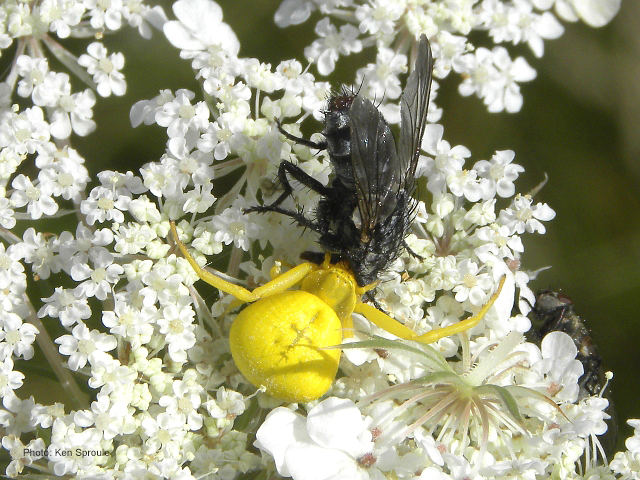
Some spiders prefer to capture their insect meals by ambush methods rather than expending any silk. Crab spiders (Thomisidae), use their larger front legs to easily grab their prey. Some species can change over time to match the colour of their plant surroundings.


A more active hunter is the jumping spider (Salticidae).These creatures pounce on their insect prey using their sharp vision and nimble movements.


Most spiders only live for one season. They lay eggs, usually inside silken cocoon-like structures. In some species the eggs hatch before winter but the young spiderlings remain protected in the silk until they can disperse in the spring.

Spiders feed by injecting venom into their prey to immobilize it. Digestive fluids liquefy the prey and the spider sucks up the remains. Gruesome as this sounds, most spiders are rarely dangerous to humans. They are more likely to escape your presence than to bite you.

Even an arachnophobic gardener can't deny the benefits of welcoming spiders into the garden. Tall grasses and long stemmed plants provide stable support for orb-weaving spiders to construct their webs. Other spiders prefer the dark damp conditions of thick mulch. If a garden provides these habitats, it can be sure of non-stop, natural pest control from spiders.


About Jean GodawaJean is a science teacher and writer. She has been writing science-related articles for print and online publications for more than ten years. Jean holds a degree in biology and environmental science with a focus on entomology from the University of Toronto. She had conducted field research in the tropical rainforests of Asia and South America.

Bookmark this post with a Pin.

Sunday, May 8, 2016

Marnie's Garden, Part 2: Discovering a Passion for Gardening


In this second post on Marnie's garden, we'll take a closer look at some of the perennials she's used. I think it is important, however, to first look at where you would even start if you wanted to create a cottage garden like this. 

So I asked Marnie where she suggested someone new to gardening should begin. Here's her sage advice:

• "I would suggest that the novice gardener looks at gardening books and magazines to get an idea of what kind of garden appeals to them." 

• "Make a plan and keep referring to it moving forward. "

• "It's hard on a limited budget, but it's a good idea to invest in your trees and shrubs first. Research your choices beforehand and take care with their planting. Don't cut corners, as trees and shrubs will be the garden's bones."

• "When buying perennials, try not to buy one of each of the perennials you like, but rather, get enough plants to make a statement. You may have to pare down your wish list to accomplish this, but one of each plant looks spotty."

These are all great suggestions! Marnie is so right about getting the bones of your garden in place early on. So often I have heard gardeners say that they regret not investing in trees and shrubs earlier. It takes years for a tree to mature and reach a decent height. 

And it is so true that one plant fails to have an impact! One perennial will get lost, especially if you have a larger garden like Marnie's.


Knowledge and skills can always be learned, but what a gardener really needs is a passion and desire to help things grow. I asked Marnie what makes her passionate about gardening.

"Jennifer, how does one describe passion?" Marnie replies. "It was an overwhelming need to be outside, working in the soil. Vegetables at first, but perennials soon took over. I really enjoy growing my own plants from seed, and the whole nurturing process until the plants are safely established in the ground."


If you're new to gardening, and on a budget, be resourceful! One of the more rustic features in Marnie's garden is a homemade shed.

"I built a garden shed from old salvaged wood from a century-old barn that had been torn down nearby," explains Marnie. "It has lots of garden collectables and old flowerpots and things I can't bear to get rid of. The shed provides a little privacy, so I built a patio seating area shaded by a big River Birch."


I showed this image last summer when I did a post on country gardens and a few readers asked about this flower. It's a weed. The flowers of Daisy Fleabane, Erigeron annuus, are a soft pink when they open and then they fade to white. 


"The tall pink Filipendula rubra, Queen of the Prairie is aggressive here in my damp soil", Marnie tells me, "and tends to take over its neighbours. It's pretty though, so I put up with having to yank out wheelbarrow loads of it every now and then. I would recommend it only for a large garden."

Queen of the Prairie, Filipendula rubra Height: 1.2-1.8m (4-6 feet) Spread: 1.8-2.4m (6-8feet) USDA zones: 3-9.


Meadowsweet, Filipendula vulgaris 'Plena' forms a low mound of fern-like leaves and has tall stems that bear creamy-white flowers in summer. Average, sandy and clay soils all suit this plant. Most forms of Meadowsweet like moist soil, but this particular variety will tolerate average moisture levels. Full sun to part shade. Height: 40-50 cm (16-20 inches), Spread: 30-45cm (12-18 inches). USDA zones:2-9.


Daylily 'Custard Candy' and Asiatic Lily is 'Cappuccino'.

Daylily 'Custard Candy' has custard colored flowers with a maroon eye. Full sun. Height:60-90 cm (24-36 inches), Spread:45-60 cm (18-24 inches). USDA zones:3-9.

Asiatic lily 'Cappuccino' has cream petals splattered with deep maroon. It blooms early to mid-summer. 
Full sun. Height: 45-60 cm (18-24 inches), Spread:30-38 cm (12-15 inches) USDA zones:5-9. 

A few tips for Growing Asiatic lilies: 
Asiatic lilies bloom on tall stalks that resembles the top of a pineapple. These lilies need well-drained soil (so the bulbs do not rot in winter) that has been augmented with some organic matter. They require at least 6 hours of sunlight to grow and bloom well. 
Plant Asiatic lily bulbs at least 12 inches apart and 4-6 inches deep. You will need at least 3 or 5 bulbs together for a good show of blooms. The bulbs can be planted in spring or in early fall. 
In the spring, feed your Asiatic lilies with a slow release fertilizer. Deadhead the blooms as soon as the petals begin to drop, so energy is not wasted in seed production. When the leaves yellow and die in late fall, cut the leafy stalk to the ground.


Echinacea 'Hot Papaya' has a centre pompom and long hanging reddish-orange petals. As the flower ages, the pompom develops into a more golden papaya color. Echinacea 'Hot Papaya' begins blooming mid-summer and will continue to bloom into the late summer if spent flowers are removed. Like most Echinacea, this plant is adaptable to a range of soil and moisture conditions. Attractive to butterflies. Full sun. Height:75-90 cm (29-35 inches) Spread:40-60 (18-23 inches) USDA zones:4-9.


Culver's Root, Veronicastrum virginicum is a very tall, bushy perennial bearing fine plumes of mauve-blue flowers from summer into fall. Attractive to butterflies. Full sun. Height: 120-180 cm (40-70 inches), Spread:75-90 cm (29-35 cm). USDA zones: 3-9.

Verbascum V. nigrum 


"The smaller Verbascum is V. nigrum and the larger one is V. olympicum. I grew both from seed and like them (as do the bees), however, they are rampant self-seeders and not for everyone", says Marnie.

V. olympicum


Another piece of advice for the beginning gardener: make your garden personal. It adds character and speaks to you, the gardener. 

No doubt you'll have noted that Marnie's property has many unique and whimsical features.

"The wheel is an old bell pull from a church," says Marnie. "I bought it at a garage sale my neighbour had this past summer. He very kindly came and put on the post to hold it up. I've planted clematis at the base and there's a hanger for a pot on the side closest to the pond."

Marnie Wright


If you want to attract Hummingbirds and butterflies Bee Balm, Monarda is a great choice. 


I want to give the final words of this post to Marnie. I asked her what encouragement she'd give the novice gardener who looks at a garden like this with awe and perhaps a little bit of apprehension.

"Never worry about what someone else's garden looks like compared to yours. Be inspired by them!", says Marnie. "Enjoy the journey, learn from your mistakes, share plants with others and you will find others will be generous with you. Work hard. Get dirty. Never mind what your fingernails look like! Fall into bed exhausted and dream about tomorrow. Before you know it, thirty-five years will have passed. You'll still love your garden and you won't be able to wait to get out there."


Missed Part 1? Go back and read it here.

Bookmark this post with a Pin.