
Wild Bergamot, Monarda fistulosa is North American native that can be found in fields and along roadsides. It's a member of the mint family (Lamiaceae), but don't worry, it's a clump-forming perennial. It does spread slowly by underground rhizomes, but the plant's roots are near to the surface of the soil and are easy to remove where unwanted.
Give this plant full sun with a little afternoon shade in southern garden zones. You'll find it's not a fussy plant and is quite happy in average garden soil. It will even tolerate quite poor soil and dry conditions.
Monarda fistulosa is a skyscraper that can reach up to 5 feet. Unlike modern hybrids, Monarda fistulosa is more prone to outbreaks of powdery mildew, but I have yet to have a problem (Perhaps this is because my garden is quite dry in the summer. If your garden gets lots of rain, you may have more of an issue with powdery mildew).

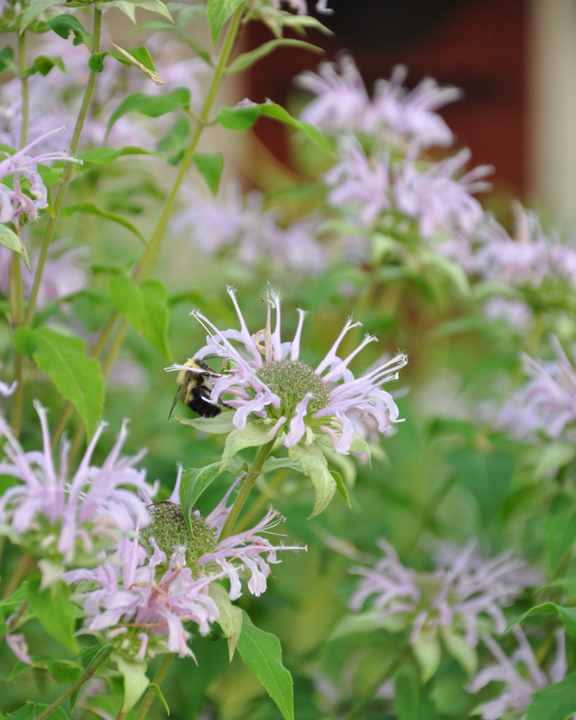

There is always the hum of bees around this perennial. Butterflies love it too.

My front garden.

Phlox paniculata 'Eva Cullum and Phlox paniculata 'David's Lavender' (above) can be
seen in the background of the previous picture.

Looking along the driveway.
The leaves and flowers of this plant are edible and can be used in both salads and cooked dishes. The dried leaves and flowers can also be used to make an aromatic tea.

Plant type: Perennial
Height: 2-5 ft
Spread: 3-4 ft
Flower: Lavender
Bloom period: Late-summer into early fall
Leaf: Toothed, aromatic blue-green leaves
Light: Full sun to light shade
Companion Plants: Ornamental grasses, Echinacea, Rudbeckia, Phlox
Divide: Spring
Deer resistant
Problems: Provide good air circulation to avoid powdery mildew
USDA Zones: 4-9

Bookmark this post with a Pin.
