Showing posts with label Geum triflorum. Show all posts

Wednesday, June 7, 2017

Welcome to my Spring Garden

In the middle distance: maroon colored Clematis 'Bourbon' reaches a height of 4-5 feet.

Wild, untamed and wonderfully fragrant! Welcome to my spring garden!

Gas Plant with blue Amsonia in the foreground. Manchurian Lilac 'Miss Kim' in the distance.

Gas Plant with blue Amsonia.

Gas plant, Dictamnus albus forms a bushy, upright clump of bright green leaves and has tall spires of white flowers in late May/early June. The plant gets its common name from the tiny amount of methane gas its flowers produce. A lighted match will flair if held near the flowers.
This plant is very slow to establish. Average soil is fine. Height: 60-90 cm ( 23-35 inches), Spread 45-60 cm (18-23 inches). USDA Zones: 2-9.

Catmint, Nepeta racemosa 'Walker's Low' 

Catmint, Nepeta racemosa 'Walker's Low' 


Deutzia x lemoinei 'Compacta': has an upright habit and white flowers in spring. Plant it in sun to part-shade in average garden soil. It likes growing conditions to be on the moist side. Height: 4-6', Spread: the same. USDA Zones: 4-8. No serious diseases or problems. Prune in spring after flowering.


Lychnis viscaria 'Splendens': When not in flower forms Lychnis viscaria 'Splendens' forms a low mound of grass-like foliage. Then in early spring magenta flowers appear on tall stems. Height: 45-50 cm (18-20 inches), Spread: 30 cm (12 inches). USDA zones: 3-7.


Centaurea montana 'Amethyst in Snow' has shaggy white flowers with a purple centre. The foliage has a downy texture and a silver-grey-green color. Full sun and average garden soil. Cut the plant back hard after it finishes flowering and it will bloom again. (Note: the common blue form of this plant, Centaurea montana has proved to be problematic in some areas of the Canada and the States. I could not find an notations about this cultivar being invasive). Height: 30-40 cm (12-16 inches), Spread: 30-60 cm (12-23 inches). USDA Zones: 3-9.

Just inside the back gate is the beginnings of a white garden.

The almost-blind, 18 year old Buddy who we've nicknamed "Old Man".

Looking toward the back garden. 

One of the birdbath planters.


Sweet Rocket and Anemone canadensis.

The infamously invasive Anemone canadensis from my last post.

Piper

The first of the Siberian Iris.

Columbine and alliums with a hosta in the near distance.

An apartment style birdhouse and a Dogwood tree on the right.

Columbine


Lupins grown from seed.

Columbine and Lupins.

Pink Columbine and and an Allium.


The path leading toward my four raised beds. 
Dwarf Korean Lilac tree form, Syringa meyeri 'Palibin' in the near distance.

'Boomerang' Lilac on the left. 

'Boomerang' Lilac blooms in the spring, and then after a short rest through the heat of summer, again in the late summer/fall. Fragrant. Full sun. Height: 4-5 ft, Spread: 4-5 ft. USDA zones:3-7.

Scraps

Not sure of this one. Geranium cantabrigiense ' Biokovo Karmina' maybe?


Prairie Smoke, Geum triflorum is a western native with decorative seed heads that look like puffs of smoke. Well-drained soil is crucial for this plant. Full sun and summer weather that is not too hot are best. Once established Geum triflorum is pretty low maintenance and is very drought tolerant. Height: 25-30 cm (10-12 inches), Spread: 40-60 cm (16-24 inches). USDA zones 3-7.


Viola sororia 'Freckles' has white flowers with china-blue speckles and heart-shaped, bright green leaves. This violet is native to Eastern North America. Part-shade or full shade. Average garden soil and average moisture levels will suit this violet. Viola sororia 'Freckles' will spread through self-seeding. Height: 15-20 cm (6-8 inches), Spread: 15-30 cm (6-12 inches). USDA zones:3-9.

The herb garden.

Pinks, Dianthus are sold as an annual here, but they usually come back the second year. 
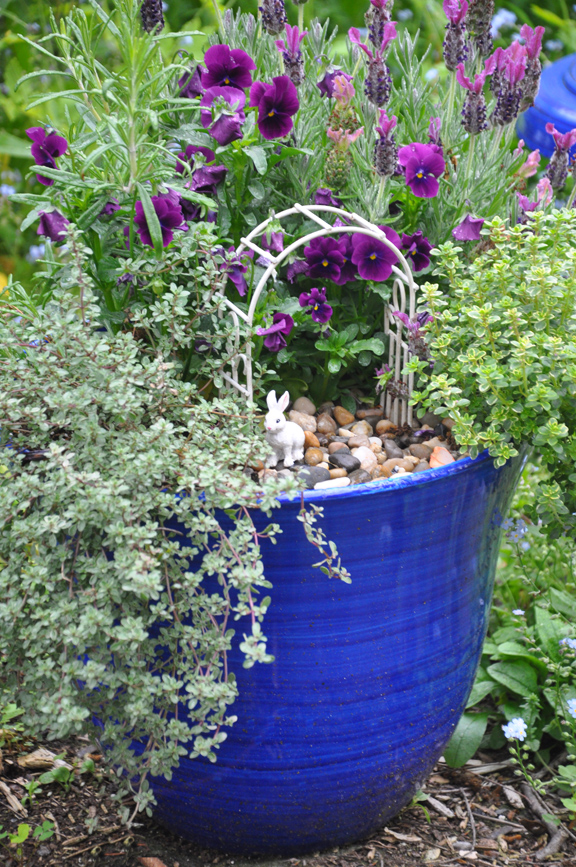
My fairy garden project from a few weeks ago.

Tall bearded Iris with a Columbine in the background.

 Columbine

Woodland Phlox, Phlox divaricata

Blue Forget-me-nots, Geranium 'Sambour' (burgundy flowers) 
and a white variety of Woodland Phlox on the right.


Woodland Phlox, Phlox divaricata 'May Breeze' has fragrant, star-shaped white flowers in early spring. Unlike more familiar Phlox paniculata that blooms much later in the summer, this plant has fine, delicate foliage. Phlox divaricata 'May Breeze' slowly spreads to form a small clump. Divide in the fall. Moist soil and part to full shade are this plants preferences. Height: 30-40 cm (12-16 inches), Spread: 30-60 cm ( 12-23 inches). USDA zones: 3-9.

My picture does not do the unusual blue-grey color of this hosta justice.

Hosta 'Joy Ride' not only has great curves, it also has foliage with a wonderful powdery, blue-green color. Light lavender flowers appear mid-summer. Part-shade to full shade. Height: 40-45 cm (16-18 inches), Spread: 90 cm ( 35 inches). USDA zones: 3-9.

An island-shaped shade garden in the back part of the yard.

A Buddha meditating in the same island-shaped bed.


Mourning Widow Cranesbill, Geranium phaeum 'Samobor' has deep red flowers and green foliage splashed with maroon. One great thing about many geraniums are their versatility in terms of sun exposure; full sun, part-shade or full shade will often work for them. Geranium phaeum 'Samobor'  is a prolific self-seeder. Cut the plant back hard to the ground after it flowers and you'll get rid of unwanted seedlings and have nice, fresh green leaves in a week or two. Height: 60-80 cm (23-31 inches), Spread: 60-70 cm (23-27 inches). USDA zones: 4-9.


Shooting Star, Dodecatheon meadia is a short-lived perennial that takes a year or so to flower. Typically they put on their best display in year three and then they disappear. Plant it in rich, moist soil. Full sun to part-shade. Height: 20-30 cm ( 8-12 inches), Spread: 15-20 cm (6-8 inches). USDA Zones: 2-9.

Pots of Pansies at the very back of the garden.


Such a weird color combination, but I love it!

Hope you enjoyed this little tour of my spring garden!

Tuesday, June 2, 2015

Two old Dogs in a Garden


The garden in May was lovely, and at the same time, a bit of a disaster. At the front of the house, the white picket fence was taken down and is still sitting in the driveway waiting to be painted. 

We live on a busy street corner, so the garden always feels a bit exposed, but with the fence down, it feels more so.

Salvia 'Caradonna' with its deep purple stems.

Last winter the city's sidewalk plow removed about a foot of soil off the front of the garden along with the snow. With their roots exposed, many of my roses perished.  

But as you can see from the picture above, many other plants held their ground and continue to flourish.

Amsonia tabernaemontana

In May and early June, Blue Star makes a great companion plant for Gas Plant, Dictamnus albus and the indigo colored flowers of Baptisia australis.

Blue Star, Amsonia tabernaemontana has green willow-like leaves and clusters of sky-blue flowers. Full sun or light shade. Average soil is fine and it will tolerate dry to moist conditions. Height: 60-90 cm (23-35 inches), Spread: 75-90 cm (29-35 inches). USDA Zones: 3-9.


Gas plant, Dictamnus albus forms a bushy, upright clump of bright green leaves and has tall spires of white flowers in late May/early June. The plant gets its common name from the tiny amount of methane gas its flowers produce. A lighted match will flair if held near the flowers.
This plant is very slow to establish. Average soil is fine. Height: 60-90 cm ( 23-35 inches), Spread 45-60 cm (18-23 inches). USDA Zones: 2-9.


At the far end of the front garden, Baptisia australis just coming into flower. Blue Star, Amsonia tabernaemontana is in the foreground.


This Dwarf Korean Lilac smells absolutely divine!


Duetzia "Yuki Cherry Blossom' is a relatively new addition to the garden.

Deutzia 'Yuki Cherry Blossom' preforms best in moist, well-drained soil. Prune in spring after it flowers. Height: 30-36 cm (12-14 inches), Spread: 30-36 cm (12-14 inches). USDA Zones: 5-8.


Centaurea montana 'Amethyst in Snow' has shaggy white flowers with a deep magenta centre. The foliage has a downy texture and a silver-grey-green color. Full sun and average garden soil.  The plant reference I found suggests this plant likes moist soil, but mine seems happy enough in a fairly dry sunny spot. The front of a border is the perfect spot for this plant. Height: 30-40 cm (12-16 inches), Spread: 30-60 cm (12-23 inches). USDA Zones: 3-9.


The backyard is in a state of upheaval. The area just inside the gate has been dug up to address concerns with our septic system. A temporary shed is half-down and a new replacement shed is half-built. Everywhere there are tools, piles of wood and other building materials.

Despite the mess, there are pockets of pretty.


All my Bleeding Hearts were fabulous this year.

Self-seeded Sweet Rocket

Siberian Irises

Columbine


We went for weeks without rain in May, so the garden hose has had to come out earlier than usual. 

Already this spring there have been a few days of 30 degree weather.


The vet surprised me the other day when he told me Scrap was 10 years old. I was fully convinced he was 8! 

He is still pretty spry for an old dog.


Buddy is 15. 

He still likes to follow me out into the garden, but unlike Scarp who always wants to play, Buddy plunks himself down in a comfortable spot in the shade and takes a nap.


This poor neglected clematis is growing up through a tomato cage. I meant to move it this spring to its final home, but never got around to it. Now the move will have to wait for fall.

The white flowers are huge!

In spring Clematis 'Hyde Hall' has nearly white flowers that are 5-7 inches in size. It reaches a height of only 5-6 ft. Prune all top growth by one third in late winter/early spring. USDA zones: 4-9.


I have been growing Baptisia 'Lemon Meringue' in my nursery bed. I'll move it to its final home in the front garden next spring. 

Baptisia 'Lemon Meringue' forms a vase-shaped mound of bright green foliage with canary-yellow flowers mid-spring. This plant prefers moist, slightly acidic soil. Full sun to light shade. Height: 90-120 cm (35-47 inches), Spread:75-90 cm (29-35 inches). USDA Zones: 2-9

 
Euphorbia epithymodies 'First Blush'

Euphorbia epithymodies 'First Blush' tolerates hot dry conditions and yet pulled through a very cold Canadian winter. It likes light, well-drained soil. Full sun. Height: 30 cm (12 inches), Spread: 45-60 cm (18-24 inches). USDA Zones 4-9.

Euphorbia Polychroma

Cushion Spurge, Euphorbia Polychroma has become one of my spring favourites. It has fresh green foliage and bright yellow flowers. Full sun. Average to sandy soil work best for this plant. Once established it likes dry conditions. Height: 30-45 cm (12-18 inches), Spread: 45-60 (18-23 inches). USDA Zones: 2-9.


Geum triflorum will grow in most soils, but like many perennials, it will be happiest in well-drained soil that has been enriched with some organic matter. Full sun is best. Once established Geum triflorum is pretty low maintenance and is very drought tolerant. Height: 30 cm, Spread: 40-60 cm. USDA Zone: 3-9

There is a sea of plum Geraniums at the back of the garden. There are a mix of two varieties of geranium: Geranium phaeum 'Samobor' and Geranium phaeum 'Mourning Widow'.

I have learned the hard way that it really pays to cut these prolific self-seeders to the ground the moment the flowers start to go over. Not only do you eliminate unwanted seedlings, you get a fresh flush of new growth that keeps the plants looking attractive all summer.


Geranium maculatum 'Chatto'

What a pretty geranium this is! The color is so light and delicate.

Geranium maculatum 'Chatto' forms a bushy upright clump of green leaves and is among the earliest geraniums to flower. Mauve flowers appear mid-spring and the plant may repeat bloom mid-summer if you cut it back hard after the first flush of flowers. Full sun to light shade.  Average garden soil is fine. This plant prefers slightly moist conditions. Height: 45-60 cm (18-23 inches), Spread: 45-60 cm (18-23 inches). USDA Zones: 4-9.


The weather has been more unpredictable than ever. 

I wonder what June will bring?